


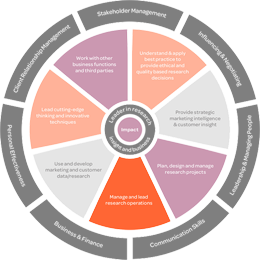
Manage and lead research operations
Training
Global Insight Academy
Training
On-demand
Bespoke company training
Qualifications
CPD
Resources
Accreditation
- MRS Qualifcations accredited centre area
- List of MRS Qualification accredited centres
- Become an MRS Qualification accredited centre
- Accredited CPD training providers
- Recruiter Accreditation Scheme/Recruiter Training Programme
- Register of RAS Accredited Recruiters
- Register of Recruiter Accredited Companies
- RAS - FAQs
Mentoring
Apprenticeships
ESRC PhD Placements
 Share
Share
Managing and leading research projects involves a number of key operational tasks from, planning resource, leading team members, commissioning suppliers, recruiting interviewers and managing the research budget.
Understanding research operations are a key part in the delivery of research ensuring that projects and associated processes are managed efficiently, on time and to budget.
Knowledge, Skills and Attitudes (Supply-side researchers)
1. Establish broad understanding of a variety of research techniques and methodologies, including strengths and weaknesses in given contexts
2. Prepare research proposals
3. Plan and manage required resource (internally and externally) on schedule
4. Set and manage research budget
5. Manage research subcontractors or third parties
6. Lead research team
Knowledge, Skills and Attitudes (Client-side researchers)
1. Establish broad understanding of a variety of research techniques and methodologies, including strengths and weaknesses in given contexts
2. Prepare research briefs
3. Plan and manage required resource (internally and externally) on schedule
4. Set and manage research and insight budget
5. Manage research providers or third parties
6. Lead research and insight teams
Beyond AI: Why Investing in People Still Matters in Research
AI is reshaping research at pace — but what happens if the sector invests in automation at the expense of people?
Beliefs beat attitudes: A new approach to consumer behaviour change
Webinar
In market research, we often focus on attitudes – how consumers feel. But beliefs – what consumers think – are often the deeper drivers of behaviour.
Understanding Synthetic Data: Applications, Opportunities and Risks for Researchers
Virtual training course
Get the latest MRS news
Our newsletters cover the latest MRS events, policy updates and research news.









©2026 The Market Research Society,
15 Northburgh Street, London, UK EC1V 0JR
Tel: +44 (0)20 7490 4911 Email: info@mrs.org.uk
The Market Research Society (MRS) is the world's leading research association. For all those who need, generate or interpret the evidence for making good business and policy decisions. Click here to find out more about us.
©2026 The Market Research Society,
15 Northburgh Street, London EC1V 0JR
Tel: +44 (0)20 7490 4911 Email: info@mrs.org.uk